

Sempio
Seller’s Concern
Inefficiency & SKU Complexity
Sempio is an F&B brand with a wide range of SKUs. In a category where low margins and fast inventory turnover are the norm, ad performance is directly tied to profitability.
At the time, the brand's operations team was still exploring Amazon Ads and had no clear framework for how to manage campaigns across dozens of products. Even when ads were efficient, they often failed to scale revenue, or they drove TACOS too high. Additionally, poor keyword targeting and low ROAS on core SKUs were putting pressure on the brand’s entire profit structure.
Sempio needed a clear path forward—not more ad budget, but smarter budget prioritization within existing limits to drive total revenue without sacrificing efficiency.
LG Optapex Solution
1) Redefining Budget Priorities for Profitability
Rather than spending budget uniformly, Optapex implemented a strategy that concentrated spend only on products and keywords with high return potential.
The goal was clear: increase total sales while keeping TACOS below a sustainable threshold. To achieve this, Optapex made granular decisions across product, keyword, and time-of-day levels—a major shift from the old model, where budget was equally spread across all SKUs regardless of performance.
That approach had proven inefficient and unscalable, prompting the brand to completely rethink how spend was prioritized.
2) Product-Level Strategy: Distinguishing Growth vs. Stagnation
Optapex classified all SKUs into “growth” and “stagnant” categories based on multiple data signals.
Growth SKUs received an average +4% budget increase
Stagnant SKUs received a 4% budget reduction
This wasn’t just based on ad sales—it also factored in total revenue trends and organic performance. For SKUs with consistently low ROAS, ad spend was cut by an average of 57%, helping drive an overall reduction in TACOS.
3) Smarter Keyword & CPC Management
In addition to product-level optimization, Optapex restructured the entire keyword bidding strategy.
Bids for low-ROAS Broad Match keywords were minimized
42% of total budget was concentrated on high-performing Phrase Match keywords
→ This led to a 112% increase in keyword-level ROAS
Budget was also reallocated based on performance:
+12% spend for high-conversion keywords
–13% spend for low-conversion keywords
CPC dropped by an average of 20%, allowing more clicks on the same budget.
Previously, budget was often evenly redistributed across similar keywords, but now, Optapex dynamically redirected spend in real-time, dramatically improving efficiency.
4) Lower Ad Spend, Higher Organic Sales
The biggest operational shift came from changing how budgets were actually executed.
Optapex ran campaigns using only 40% of the allocated budget, choosing not to spend the rest when returns weren’t justified.
This wasn’t just cost-cutting—it was a strategic decision based on the insight that organic sales could rise even with less ad pressure.
Ad spend dropped by 63%
Ad-attributed sales decreased by 31%
But organic sales rose, and total sales increased by 5%
This indicated that the old ad structure had been cannibalizing organic traffic.
In addition, Optapex detected high-ROAS time windows and reallocated +9.6% more spend to those periods, further maximizing returns.
Results
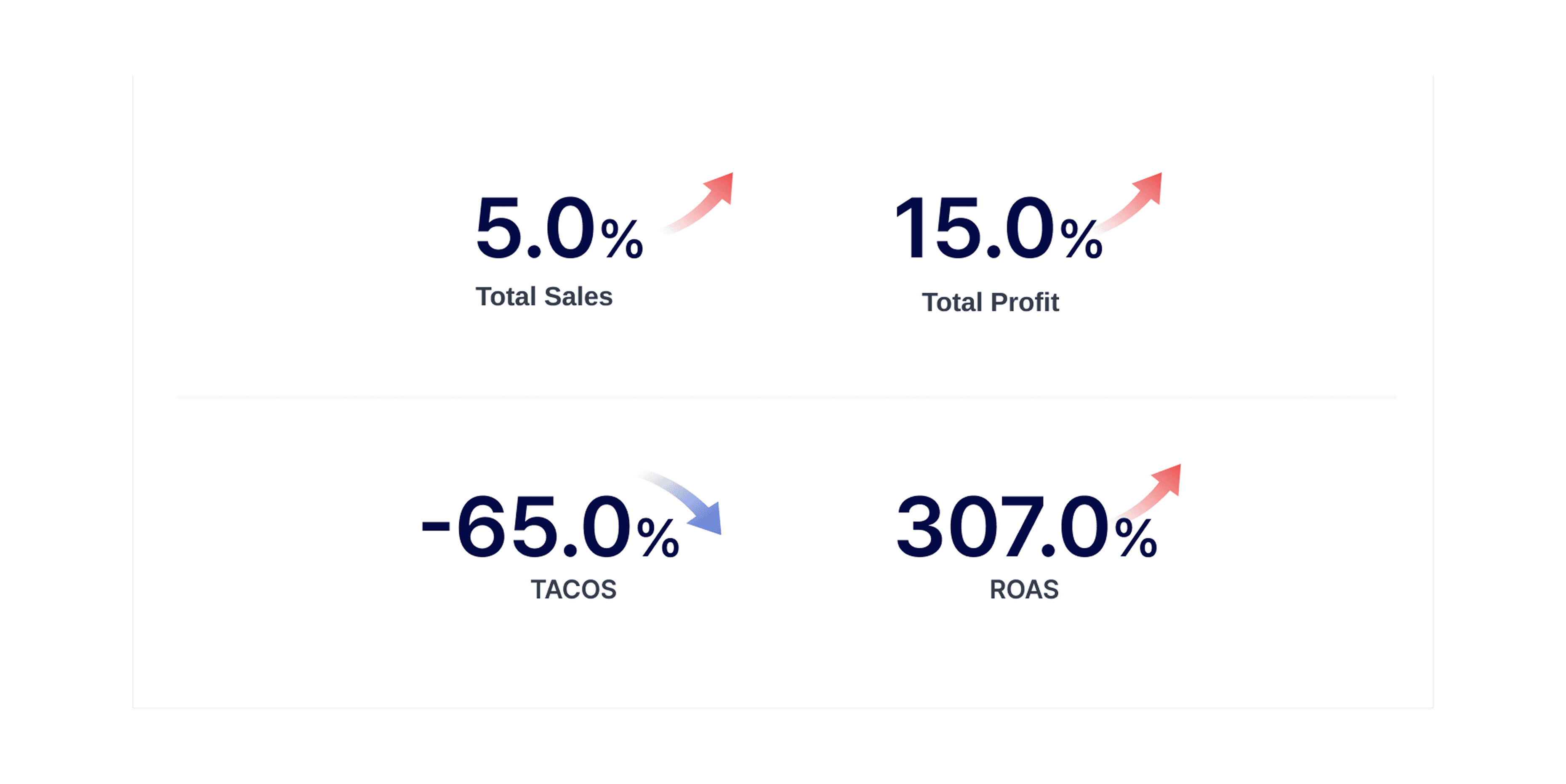
After implementing Optapex, Sempio reduced its ad spend by 63%. While ad-attributed sales declined by 31%, this was offset by a rise in organic sales, resulting in a 5% increase in total revenue and a 15% improvement in total profit. At the same time, ROAS improved by 307%, and TACOS decreased by 65%, marking significant gains in both advertising efficiency and overall profitability.
Conclusion
Spend Less, But Spend Smarter
Sempio’s case illustrates that advertising success isn’t about how much you spend—it’s about where and how you spend it. With a complex SKU lineup, prioritization becomes difficult.
But LG Optapex delivered measurable profitability improvements by automating budget reallocation and optimization across all levels.
In the end, ad spend went down, but efficiency and profitability both rose. Optapex proved to be more than a management tool—it acted as a strategic partner that helped Sempio stay on course toward long-term, scalable growth.
ⓒ All page content is property of LG Optapex. The source must be indicated when quoting and any further copying, unauthorized reproduction or redistribution is prohibited.
